BeBeyond

International Conference on Built Environment and Beyond: A special focus on Circular Economy

SPARC Funded

International conference on
Built Environment and Beyond

A special focus on circular economy

Hybrid mode

18th & 19th February 2026 at VMCC, IIT Bombay, India

Built Environment and Beyond (BeBeyond)

The international conference Built Environment and Beyond (BeBeyond) invites scholars, researchers, professionals, and students to contribute papers addressing the evolving landscape of sustainable development and innovation in the built environment. This conference is part of the CAPABLE program—Capacity Building in Built Environment Sustainability Research—a two-year collaborative initiative funded by the UK-India Education and Research Initiative (UKIERI) and SPARC. The program, jointly led by IIT Bombay, Liverpool John Moores University (UK), Dr. B. N. College of Architecture (Pune), and the Pune Construction Engineering Research Foundation (PCERF), aims to strengthen research capacity at the undergraduate and postgraduate levels and build meaningful bridges between academia and industry in India and the UK.

Objectives

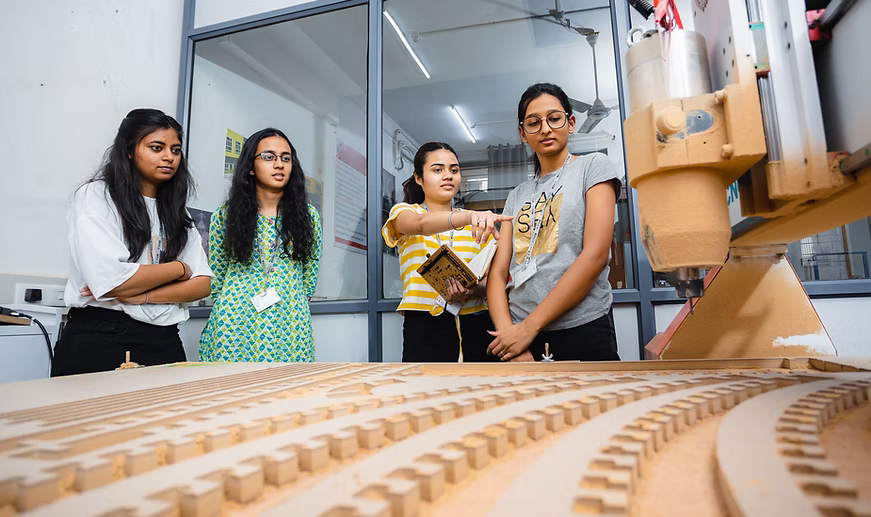
To promote collaboration and innovation in teaching and learning and facilitate Transnational Education in Higher Education Institutions

Mission

TO identify construction industry skill demand and gaps, develop effective mechanisms for bridging the divide.

Key Themes

The themes and sub-themes of the conference are as follows

Materials and Circular Economy

  • Circular material flows in construction
  • Bio-based and renewable materials
  • Material passports and digital tracking
  • Waste reuse and upcycling in the built environment
  • Lifecycle analysis (LCA) and embodied carbon of recycled materials
  • Dematerialization and resource efficiency
  • Design for disassembly and reuse
  • Circularity and Material procurement
  • Material stewardship and circularity
  • Material recycling and material innovations
  • Construction and demolition waste management
  • Circularity in water in the built environment

Building / Infrastructure Design

  • Circular building design principles and case studies
  • Adaptive reuse and transformation of buildings
  • Modular and prefabricated construction systems
  • Design for adaptability, longevity, flexibility, and resilience
  • Infrastructure retrofitting for circularity
  • Green roofs, walls, and eco-material applications
  • Performance-based building design strategies
  • Embedding circularity in the Landscape design

Urban and Community Level

  • Circular urban planning and zoning innovations
  • Community-scale resource sharing systems
  • Circular economy in informal settlements and low-income housing
  • Urban mining and material recovery in cities
  • Cultural and social dimensions of circular urbanism
  • Community participation in adopting circularity
  • Spatial circularity and urban commons, circularity in land-use
  • Integrating circularity in urban regeneration/redevelopment

Policy and Economic Aspects

  • Circular economy policies in the built environment
  • Extended Producer Responsibility (EPR) in construction
  • Economic incentives and business models for circularity
  • Public-private partnerships for circular transformation
  • Regulatory frameworks and compliance mechanisms
  • Metrics and indicators for circular performance
  • Circularity and climate resilience
  • Investments and returns in the design of circular buildings and infrastructure
  • Environmental, economic, social benefits of circular practices and opportunities
  • Education and pedagogical approaches to integrate circular economy.

Services

  • Circular service models in the built environment (e.g., Product-as-a-Service)
  • Shared mobility and infrastructure-as-a-service
  • Facility management for circularity
  • Reverse logistics and take-back schemes
  • Digital services enabling circular construction (e.g., BIM, IoT, Digital twinning, AR/VR)
  • Role of digital tools in addressing circularity in building design, facility management

Energy

  • Energy circularity and closed-loop systems
  • Renewable energy integration in buildings and cities
  • Energy efficiency retrofits and net-zero strategies
  • Smart grids and decentralized energy systems
  • Energy-from-waste solutions
  • Embodied energy reduction in materials and construction
  • Energy justice and equitable transitions

Key Dates

Abstract Submission

25 September 2025

Abstract Acceptance Notification

30 September 2025

Full Paper Submission Deadline

30 November 2025

Full Paper Acceptance Notification

15 January 2026

Conference Registration Deadline

20 January 2026

Submission of Camera Ready Papers

30 January 2026

Oral Presentation Submission

30 January 2026

Conference Dates

18 and 19 February 2026

Exciting Updates

Stay tuned for the latest news and updates from the CAPABLE program. From application deadlines and cohort selections to training schedules and conference details, this section will keep you informed about all key developments. Join us as we embark on this journey to enhance research capacity and foster sustainable practices in the built environment through our UK-India collaboration.

Our Esteemed Partners

Conference Funding Agency

Funding Agency

Academic Partners

Industry Partner

For Queries contact us

Email your queries on capable@bnca.ac.in